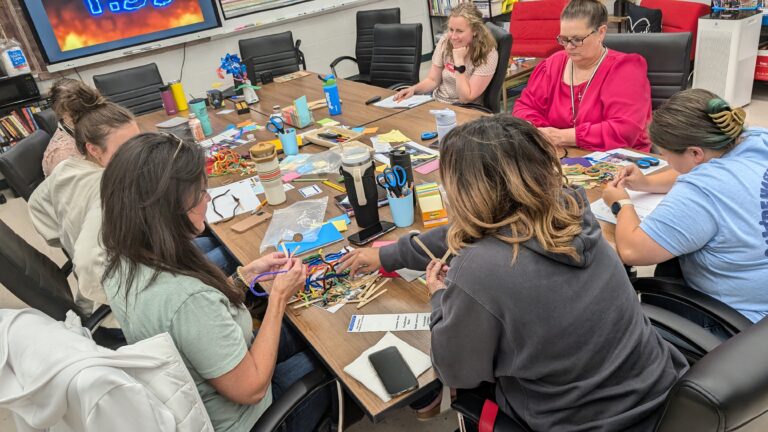
A museum educator seeking professional advancement anchored her practice in joy, research, and mentoring.
A museum educator seeking professional advancement anchored her practice in joy, research, and mentoring.

Sarah Wiley
- Museum Educator
- Scott Family Amazeum
- Bentonville, AR
Leading With Joy
For more than a decade, Sarah Wiley has helped educators rethink what hands-on learning can look like by unpacking ideas around making, tinkering, STEAM, and project-based learning.
After years of leading professional learning experiences at the Scott Family Amazeum in Arkansas, she started exploring whether postgraduate study could help deepen her impact as an educator and mentor.
“It was a great opportunity and good timing for where I was professionally,” she says. “It was also helpful that I could earn some grad school credits.”
Getting Grounded
Sarah entered the Maker Educator Leadership Certificate Program with extensive experience facilitating learning… and a healthy dose of skepticism for online learning.
“But I was surprised every week wanting to do this and keep doing it,” she says.
What stood out most was the sense of connection built through the program’s virtual format. Through conversations, collaborative sessions, and shared reflection, Sarah found a community of educators who challenged and energized one another.
Academic readings and frameworks helped Sarah better articulate ideas she had long practiced intuitively in her own work.
“The research helped validate why we do what we do,” she says. “Some of those articles are now my anchors for the professional development I design.”
Sarah Wiley
- Museum Educator
- Scott Family Amazeum
- Bentonville, AR
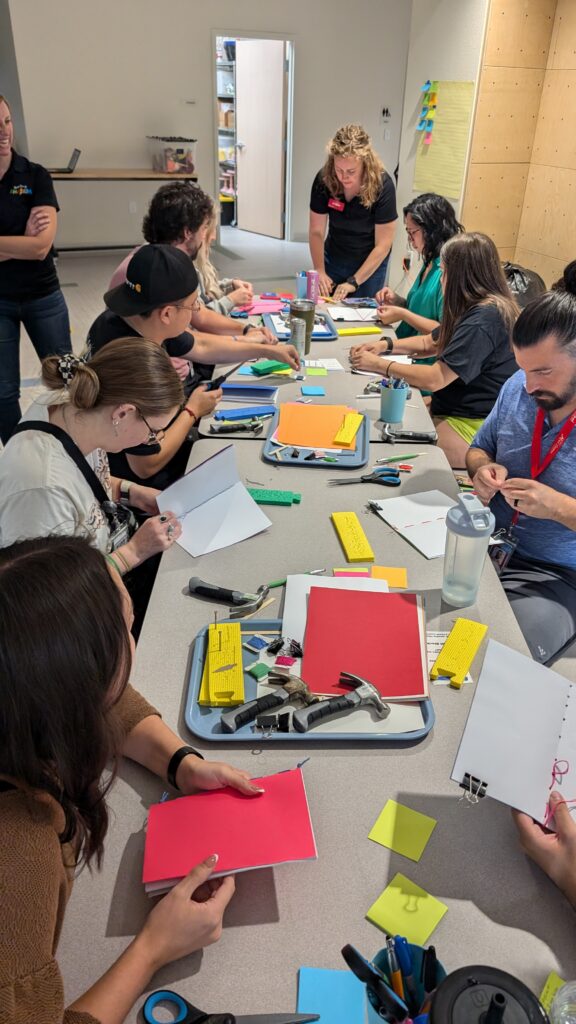
Mentoring Maker Educators
For her practicum project, Sarah focused on mentorship. After identifying “joy” as a core leadership value through an exercise in the program, she designed a structured mentoring experience for another educator she had been supporting for several years.
Together, they explored readings, reflection practices, and leadership strategies grounded in relationship-building and shared learning.
“If we can have good relationships,” Sarah says, “we can support each other and get better.”
The Power of a Thoughtful Community
Today, Sarah continues supporting educators while exploring future postgraduate study and research opportunities of her own. Through the program, joy became more than a personal value. It became part of how she thinks about leadership itself.
“So much is possible,” she says, “when you are a thoughtful educator in a group with other thoughtful educators.”